
MANGOES IN GHANA AND SICILY

The mango is an evergreen tree, native to the Indo-Burmese region, known for millennia, which in native environments reaches majestic dimensions, even 30 meters high and with branching up to 10 meters. According to FAO statistical data, today the global area affected by mango cultivation is almost 5 million hectares, mainly between Asian countries and in South America, with an annual production of about 37 million tons.

Mediterranean countries such as Israel, Egypt, Spain and Sicily are playing an increasingly important role in the production of quality fruit.
In Sicily, the mango was introduced from the 80s by a group of farmers and in collaboration with the University of Palermo and Prof. Francesco Calabrese in order to diversify production and increase agricultural income and today according to the latest estimates of Agriculture Department of the Region of Sicily are grown about 55 ha along the coastal areas. The cultivation of mango in Sicily is constantly expanding, thanks to the growing interest of consumers in a food now considered nutraceutical and functional, which has the advantage of being harvested on the tree rather than being imported from tropical areas.
Despite being traditionally little known for tropical fruits, the latitude of the island and climate changes have made it suitable for mango cultivation, especially along the northern coast between Messina and Palermo. The warmer climate, the Mediterranean breeze and the fertile soils of Sicily, especially in the areas of Sant'Agata di Militello and along the north coast, create ideal conditions for the growth of mango.

Farms adopt sustainable cultivation methods, harvesting the fruits only when fully ripe and manually to ensure superior taste and quality, without resorting to artificial ripening technologies.
Different varieties such as 'Tommy Atkins', 'Keitt', 'Osteen', 'Glenn' and 'Maya' are grown in the open field. The limited vegetative development due to the climate facilitates the management of the crown, even if cold winter events require specific protection.
The area under cultivation has grown rapidly, from 500 to over 1200 hectares between 2019 and 2023, with networks of producers organised into national and European markets.
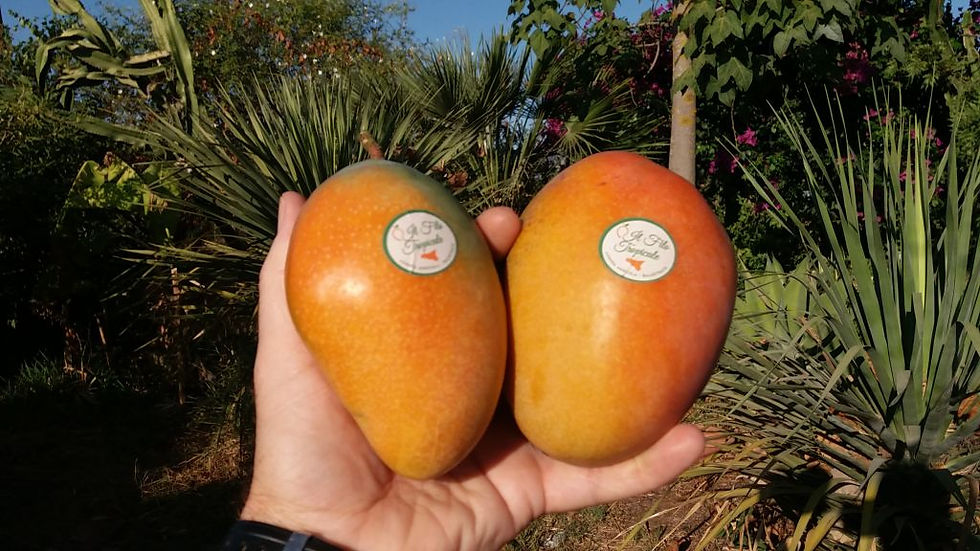
The University of Palermo is active in applied research to optimize sustainable irrigation, pest control, flowering management and post-harvest, adapting cultivation to local microclimates and maintaining high fruit quality.

The case of the town of Balestrate is particularly noteworthy. Since the mid-1990s, mango cultivation has developed in Balestrate. The main local crop is the Kensington pride, of Australian origin, with very sweet and fragrant fruits, rich in beneficial properties. It began with an experiment of the university professor Francesco Calabrese who bought a villa in Balestrina territory, and planted 2,000 trees. Now there are about ten hectares cultivated with the trees of this tropical fruit. So, from the historic site of the Florio and Woodhouse factories, to the mango capital, Balestrate over the centuries has undergone a transformation of its landscape, confirming the fertility of its lands. The microclimate and geographical position have favored the growth of delicious tropical fruits. In fact, it is said that the mango of Balestrate is among the best, if not the best among those of European origin.

Also in Ghana, mango production is dominated by the Keitt variety, which accounts for about 80% of all mangoes grown, alongside other varieties such as Kent, Palmer, Haden and some local varieties. Keitt mango is preferred because it tends to produce large fruits and is harvested later in the season (from June to August), allowing the fruit to enter the market after the supply peak of local mangoes, helping to maintain more stable prices.
The Kent variety is also grown commercially in Ghana and is appreciated for its resistance to diseases such as anthracnose, making it a solid and reliable choice for farmers. Both the Kent and Keitt varieties originate in Florida and have adapted well to the climate and soils of Ghana. Mango cultivation is considered a promising agricultural opportunity with growth potential for both local consumption and export.
Mango cultivation in Ghana is predominantly practiced by small and medium-sized farmers in the regions of Brong Ahafo (Kintampo-Sunyani area), Volta and Central, with room for improvement in business development and marketing strategies to maximise profitability.
The high-quality Ghana mangoes (mainly Keitt and Kent varieties) offer opportunities for export growth despite difficulties in disease management and cultivation support.

In and around Accra, mango production and processing is an integral part of the mango sector in Ghana. Although Accra is an important centre of consumption and trade, the main processing plants are located nearby, particularly in Adeiso (about 70 km from Accra) and Nsawam, which are centres for mango drying and production of mango products for local consumption and export.
Some companies grow mangos and produce a variety of fresh products, including fresh mango, dried mango, mango jam, and popsicles, with a strong focus on quality "from producer to consumer". Others run a modern fruit drying plant capable of handling six tons of fresh mangoes per day, increasing processing capacity and connecting rural farmers to urban markets like Accra.
The Accra region is also home to many small and medium-sized agro-industrial enterprises supplying fresh and processed mango products to local markets, hotels and export chains. Quality standards and export requirements are actively applied in these areas, with particular emphasis on post-harvest management, phytosanitary control and packaging.

In general, Accra serves as an important market and logistics centre, while the surrounding peri-urban and rural areas such as Dodowa, Adeiso and Nsawam contribute significantly to the production, processing and export of mango in Ghana.
Comments